
How Good Systems is Helping the City of Austin Navigate the AI Frontier
When ChatGPT burst onto the scene in late 2022, cities across the country rushed to explore how generative AI could transform government services. Austin was no exception. But as city leaders contemplated deploying these tools, they faced a pressing question: How do you ensure thousands of municipal employees use these powerful technologies responsibly?
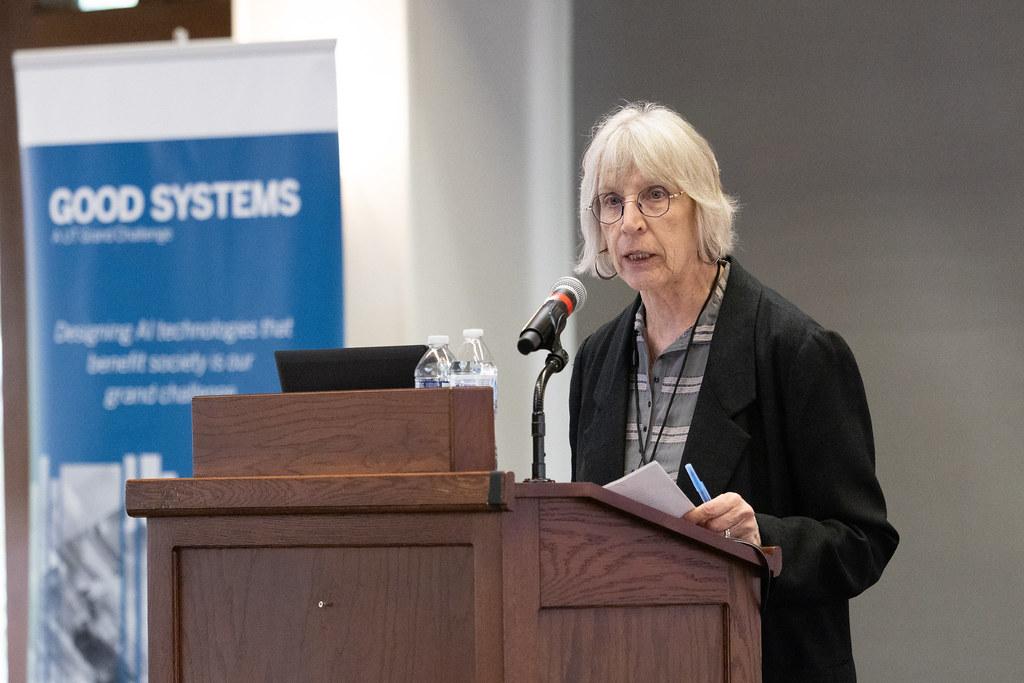
For Sharon Strover, a professor in the Moody College of Communication and leader of Good Systems’ Being Watched research project, that question was a familiar one. Her research has long examined how public-sector technologies, particularly surveillance and monitoring systems, intersect with ethics, accountability and public trust. As large language models entered city workflows, the stakes shifted.
“In the wake of large language models and ChatGPT in particular, cities embraced AI and began to talk about AI policies alongside other public-sector technologies,” said Strover, who is also the co-director of Moody’s Technology & Information Policy Institute. “That led them toward wanting to use the technologies, but use them safely, correctly, ethically.”
In fall 2024, the City of Austin selected Strover’s team to develop AI literacy materials and deliver workshops focused on responsible AI education for city employees. The work unfolded alongside a broader citywide effort to clarify expectations around transparency, privacy, accountability and workforce readiness in the use of AI.
Putting Values Before Tools
From the beginning, Strover was clear about what the training would — and would not — be. “Our real value add was not on prompt engineering,” she said. “It was, and remains, foregrounding ethical considerations,” especially around data use, accountability and public trust.
The team — co-led by Moody's Brad Limov, then a postdoctoral fellow (now a lecturer), and Azza El-Masri, a graduate student — designed what they describe as an ethics-first approach to AI use in the public sector. Rather than focusing on technical tricks, the curriculum encouraged employees to ask critical questions: What problem are we trying to solve? Who might be affected? What data are we using? Who is accountable if something goes wrong?
To shape the training, the researchers conducted two surveys, including one that reached roughly 1,500 city employees. They also held six interactive workshops attended by more than 100 participants across various departments.
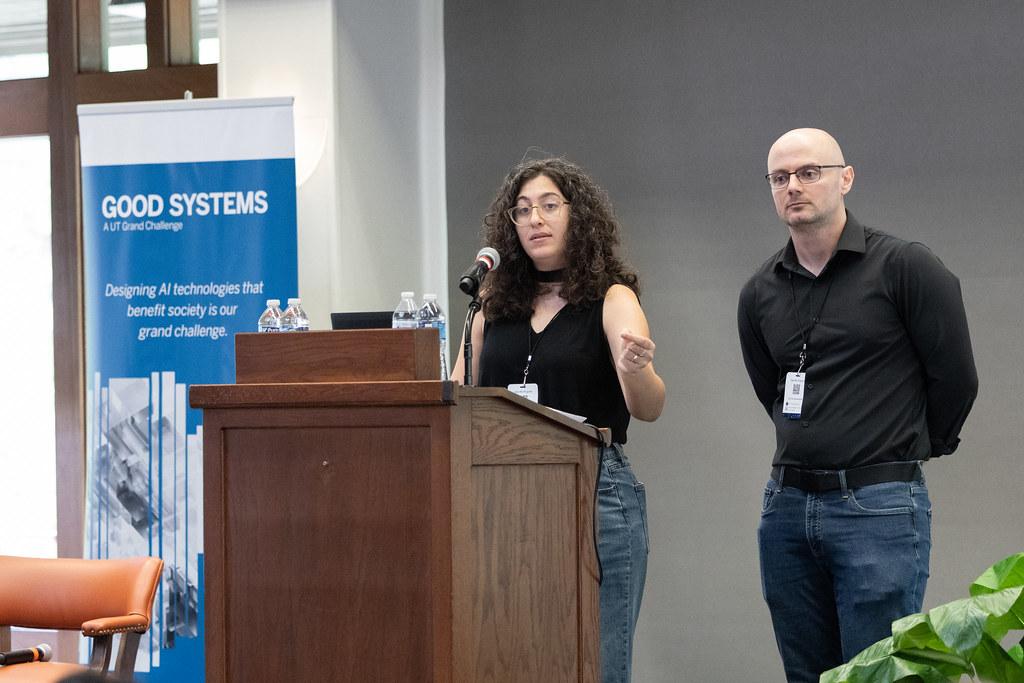
The workshops revealed a wide range of familiarity with AI tools. “There were people who had never used AI, who had never even thought about ChatGPT, and then there were people who were using (AI tools) daily in ways that weren’t necessarily sanctioned,” said El-Masri, who helped design and lead the sessions.
What stood out most, however, was the participants’ eagerness to learn, and to do so together. It proved to be a workforce that was both curious and cautious. “The virtue of having a group like this working together was that people were able to make suggestions,” Strover said.
That process reshaped the training itself. “We constantly retooled the case studies based on their feedback,” El-Masri said, explaining that some early examples had to be scrapped or revised once employees pointed out how their work actually functioned in practice.
“Cities have embraced AI and... use the technologies, but they want to do so safely, correctly, ethically.”
— Sharon Strover, Moody College of Communication
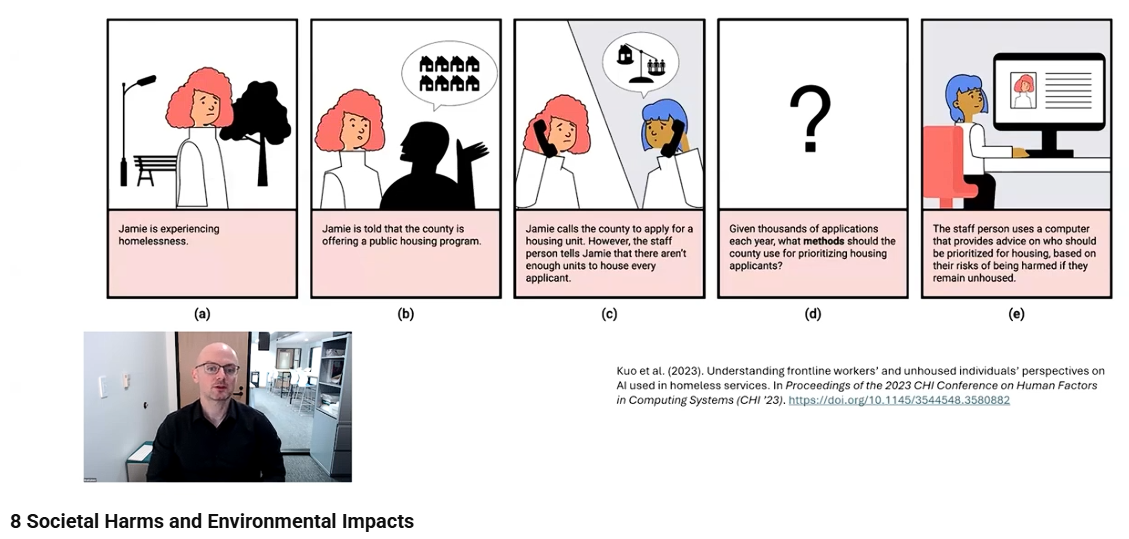
Participants worked through realistic scenarios they were likely to face — creating accessible park brochures, for example, or using AI to design community surveys without reinforcing bias. Each exercise paired technical exploration with ethical reflection.
By the end, Strover said, employees were intrigued. “They did want to figure out ethical ways to incorporate what they’d learned,” she said.
The workshops and surveys ultimately resulted in a final report — “Ethical AI for the City of Austin” — delivered to the city last August, as well as a 10-part video series designed to support employee training, covering topics ranging from understanding large language models to navigating the City’s specific "GenAI Standards."
Joining a Broader Conversation
Austin’s efforts are unfolding within a rapidly evolving policy landscape. One year after the city adopted new AI-related guidelines, Texas House Bill 149, known as the Texas Responsible Artificial Intelligence Governance Act, placed new limits on how local governments can regulate AI systems and companies developing them.
At the same time, the City recently adopted the TRUST ordinance, which establishes new oversight and transparency requirements for certain surveillance technologies. Strover noted that local governments often face a more immediate level of accountability to residents when deploying technologies that could directly affect communities.
“When employees can see both the opportunities and the risks, they’re better equipped to make decisions that reflect our values and support responsible innovation across the City.”
— Michele Lau-Torres, City of Austin
The project also connected Austin to broader national efforts through the GovAI Coalition, a growing network of cities sharing tools, templates and peer learning around responsible AI adoption in government. Last fall, Strover shared Austin’s survey findings and workshop insights — including employees’ concerns about bias and the uneven familiarity with AI tools across departments — with GovAI’s education committee, contributing to an expanding body of practical guidance for municipalities navigating similar challenges.
“AI literacy isn’t just about understanding new tools — it’s about strengthening our culture of learning,” said Austin’s chief learning officer, Michele Lau-Torres, who worked closely with Strover’s team on the project. “When employees can see both the opportunities and the risks, they’re better equipped to make decisions that reflect our values and support responsible innovation across the City.”
Beyond the Office
While this initiative focused on internal city operations, the team’s work also feeds into the next phase of the Being Watched project: a forthcoming “People’s Guide to AI” aimed at engaging the broader public. “We learned a lot about what city workers need,” Strover said. “Now, how do you talk about it with the public at large?”
For El-Masri, that question points to a broader shift in how people think about AI itself. “Technology is not inevitable,” she said. “You can shape how it’s used within an ethical framework."
"Technology is not inevitable. You can shape how it's used within an ethical framework."
— Azza El-Masri, Moody College of Communication
For Strover, the answer lies less in mastering the newest tools than in reinforcing thoughtful governance. “We thought our ethics-first approach struck a chord with people,” she said.
As the City of Austin continues to pilot new tools, from ambulance routing optimization to real-time fire tracking, the foundation laid by Strover and her team helps ensure that these advancements don't come at the cost of public trust. In Austin, the future of technological development isn't just about smarter artificial intelligence; it’s about more thoughtful humans.