
A Panel of Whole Communities–Whole Health Researchers and Community Partners Reflects on What the Initiative Has Learned, How the Work has Changed and Where it Might Go Next
It has been nearly a decade since UT leadership challenged the University to think bigger about the world’s most urgent problems. That charge helped give rise to Bridging Barriers, a university-wide grand challenges initiative that would eventually launch Whole Communities–Whole Health in 2018.
A lot has changed since then. The years since have brought a global pandemic, an AI revolution and rapid growth across Central Texas. Through it all, WCWH has continued to ask a deceptively simple question: What would it take to understand health not one variable at a time, but in the full context of people’s lives, families, homes and communities?
At the center of that work has been WCWH’s flagship cohort study, a long-term research effort with families in eastern Travis County. The study has asked participants to share data from many corners of their lives — from indoor air and water quality to language development, biological samples, stress, family routines and the broader conditions shaping their communities. Just as important, WCWH has made returning that information to participants a core part of the work, raising a challenge that runs throughout the discussion below: How do researchers share complex data accurately, usefully and without the sort of academic jargon that can alienate the general public?
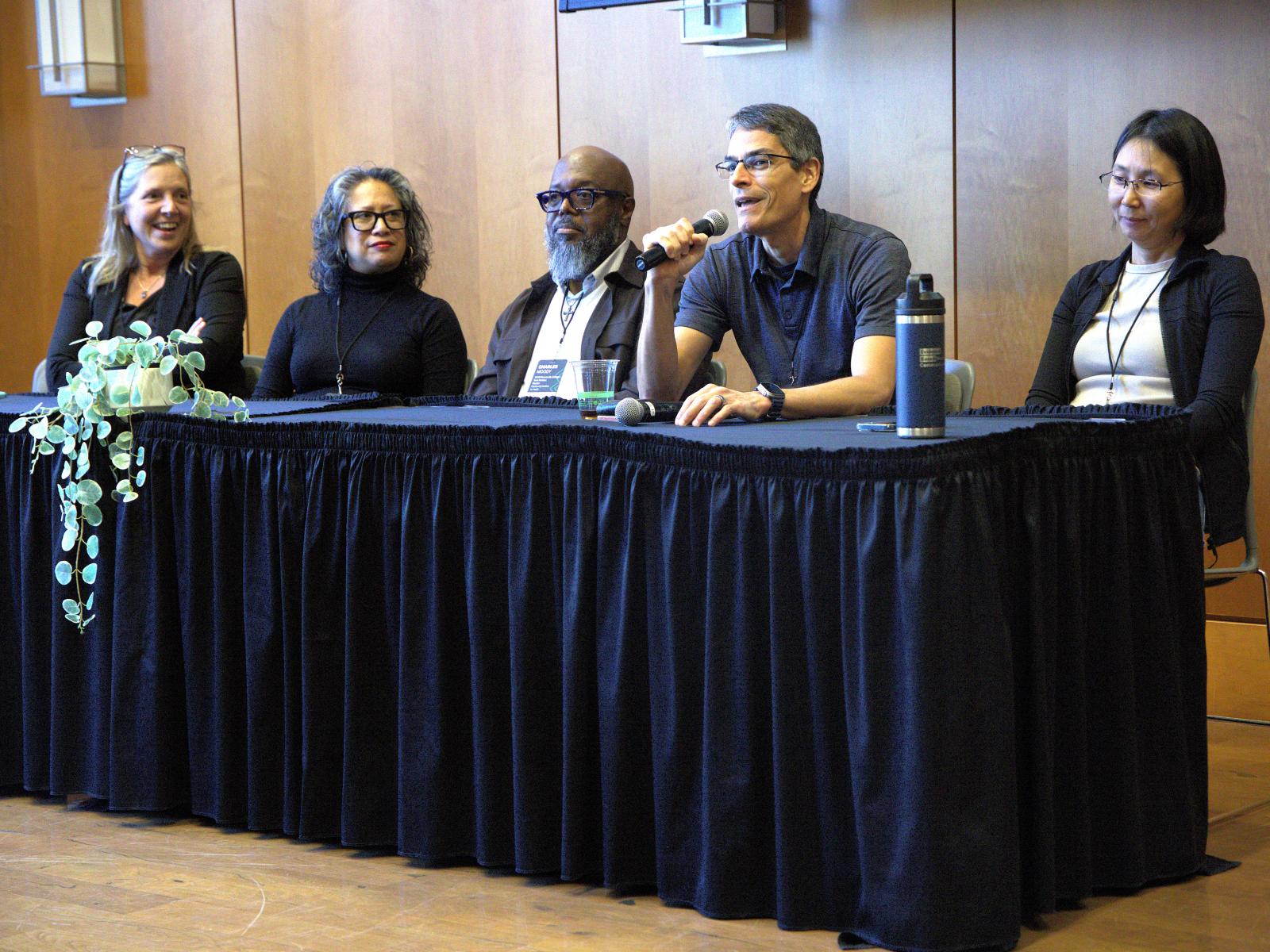
All of that was the backdrop for the keynote conversation at this year’s Whole Communities–Whole Health Research Symposium, held on campus in February. As WCWH’s cohort study enters a period of transition, the panel brought together researchers and Community Strategy Team members to look back on what they have learned, how community partnership has changed the research and what it might mean to carry that work forward.
The following session has been edited and condensed for length and clarity.
Participants
Isela Guerra — WCWH Community Strategy Team Member; Senior Community Engagement & Outreach Manager, Central Health
Kerry Kinney — L.P. Gilvin Centennial Professor in Engineering, Maseeh Department of Civil, Architectural and Environmental Engineering
Charles Moody, Jr. — WCWH Community Strategy Team Member; Founder, Community Coalition for Health
Edison Thomaz — William H. Hartwig Fellow in Electrical Engineering; Associate Professor, Chandra Department of Electrical and Computer Engineering
Yan Zhang — Professor, School of Information
Moderator: Mike Mackert — Chair, Whole Communities–Whole Health; Director, Center for Health Communication; Professor, School of Advertising & Public Relations and Department of Population Health
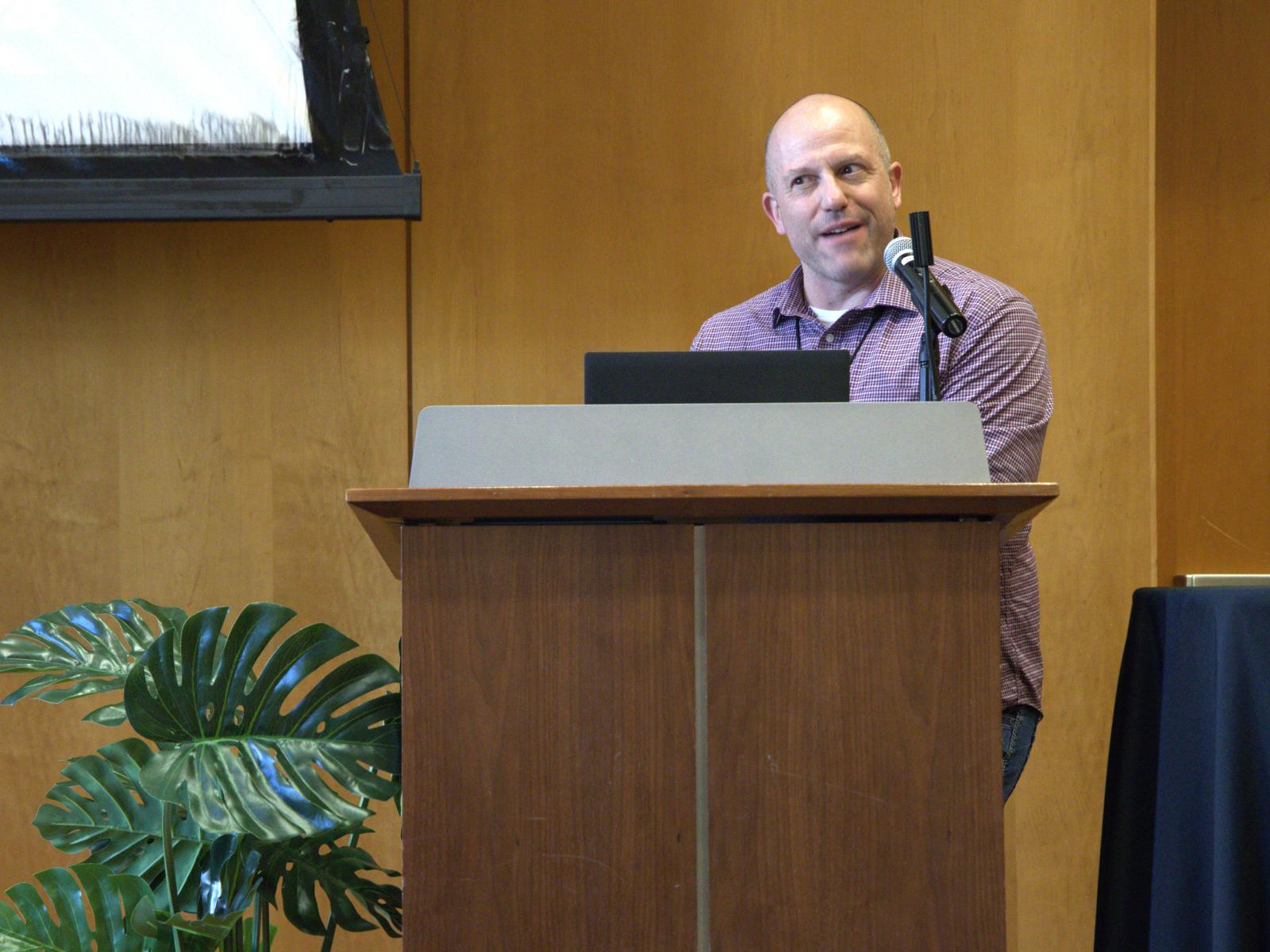
What is one of your favorite memories from the early days of WCWH?
Moody: I have two memories that resonate in my mind. Once, we were talking about how people in the community would feel about having a recording device in their house. I said, “Oh no, I will never let you record what’s in my house, because I have a UT language, I have a church language and then I have a home language, and they are extremely different.” My concern was that if you heard my home language, it could be misconstrued.
And then, in a subsequent meeting, Kerry introduced the beacon [an in-home air monitoring device that tracks particulate matter in real time]. She said, “We finally got this beautiful device all set up. It’s going to be great.” She put it on the table, and Mia said, “That looks like a rat trap. I would never let that in my house.”
Kinney: In our defense, in an engineer’s worldview, it was a thing of beauty. It was made in the makerspace. But you can’t make it too beautiful, because you can’t add varnish or anything that would affect the indoor air quality monitor. You’ll see in our presentation later today that we learned from this feedback. The next iteration looks more like a typical indoor air quality monitor.
The other thing I learned is how hard it is to return complex data accurately but without jargon. We have microbiome data and all these complex results, and we have to explain what we can say and what we can’t say from the data we collected. The Community Strategy Team and others have kept us very honest. On the technology side, some of this is easier for engineers. The communication side — distilling information in a way that is accurate and valuable to the community — is incredibly challenging.
"This changed the way I view technology. Now, when I encounter a problem, I don’t rush to say, 'Let’s design an app.' I think more broadly about who the users are, what the constraints are and what infrastructure we’re working with."
Yan Zhang, School of Information
Thomaz: I remember the early days when we would get together in a small room and write on the board, trying to figure out what this was going to be, what technologies we were going to use and what sensors we were going to use. One of the things I’ve been involved in is the mobile app we use, HornSense, and early on I was also helping a little with the beacon.
We went through many iterations. Then we were hit by COVID, and we were already developing this app that was (collecting data). UT became interested all of a sudden in an app like that, so we repurposed some of those efforts toward developing the UT app. Not too long after, they lost interest in the app again, but we kept going. Here we are now, and the app is getting better every day. You never really know how the world is going to unfold and how your work is going to be valued.
Zhang: In our early work, we were constrained in how we could present data to participants. The first thing you think of is an interactive system, but because of technical and time constraints, we decided to develop a PDF. It was not fancy, but going back to basics was interesting and challenging.
We began with the water quality report and tried to speak in the user’s language. Then we found out it didn’t work as effectively as we thought, because people would read it on a mobile platform. A four-page paper report could become 11 pages or 20 pages on a small screen, so navigation became an issue. Later, we added a table of contents and navigation so people could go back and forth.
That changed the way I view technology. Now, when I encounter a problem, I don’t rush to say, “Let’s design an app.” I think more broadly about who the users are, what the constraints are and what infrastructure we’re working with.
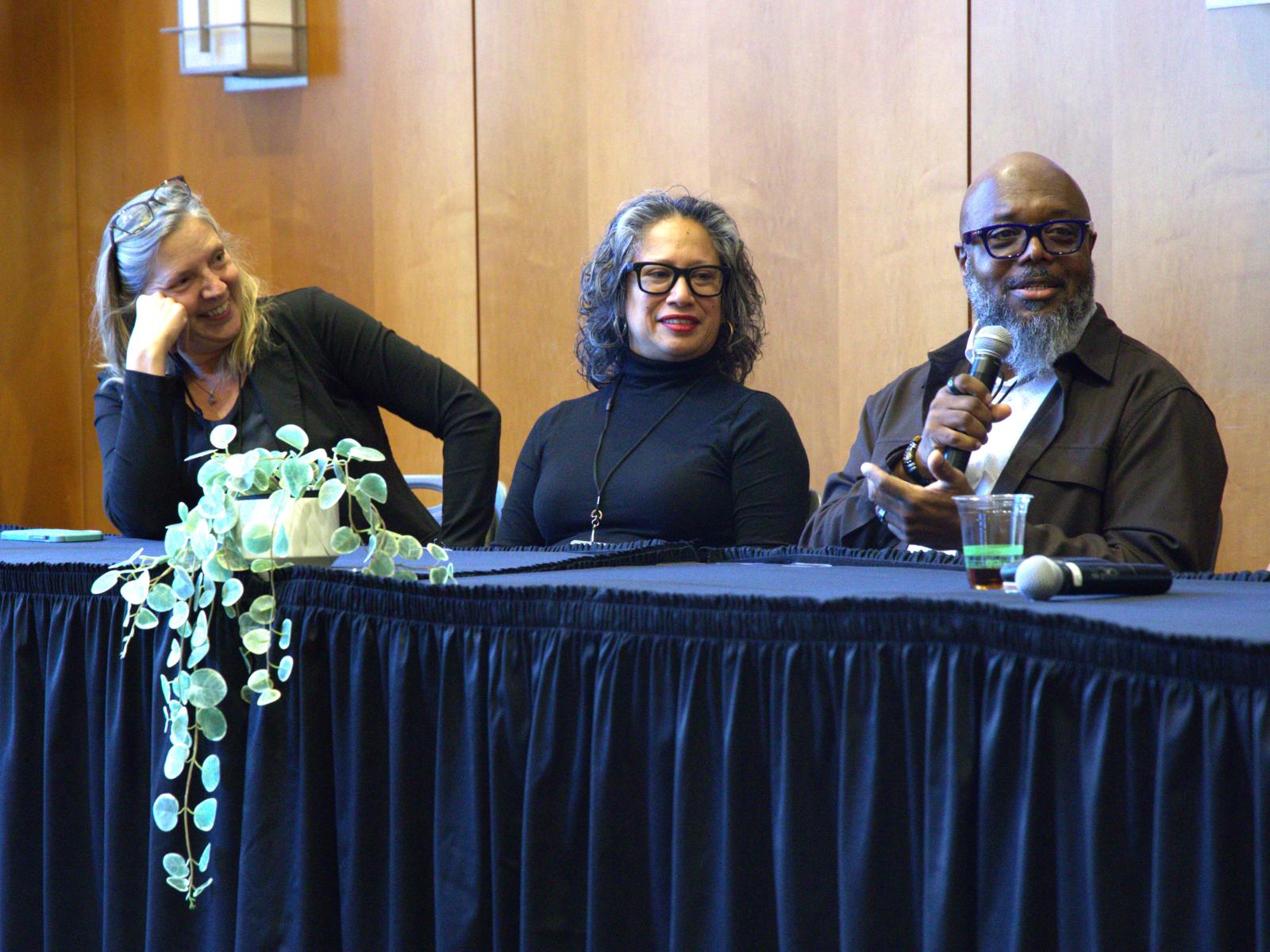
What have you learned through the project that changed the way you think?
Thomaz: Before this project, I didn’t think about air quality at all. Now I think a lot about the air quality in my own home. I grew up in Brazil, where we didn’t have AC and left the windows open all the time. Here in the U.S., we don’t. I’m always thinking about the cooking I’m doing and the windows being closed, and I try to open them every once in a while. That’s something I’ve learned, and I’m excited to keep learning more.
Zhang: I had a similar experience. I learned more about air quality and water quality. I come from China, and we kept our windows open all the time. Here, you need to think about ventilation. One lesson I learned is that cooking is a source of indoor air pollution. Every time I cook now, I think about that. It broadened my view of how social and economic activities affect our society.
Moody: I’ve learned a lot because I sit in the space where we talk about findings, and then I work directly with the community those findings impact. From the air quality standpoint, it makes me think differently about city planning and the placement of residential communities next to industrial areas — how affordable houses are located close to places where people can work, but those places also emit things into the air that can lead to long-term sickness and disease.
I also think about terminology. In one report, there was a term — “good chaos” — to describe noise in a home. From a community standpoint, that bothered me. No one wants to hear that their home is chaotic. My home has a dog. My home has a 4-year-old. There’s noise in the background. That’s not chaotic. As researchers, can we redefine these things and use words that are not detrimental or harmful?
Kinney: One of my first lessons came when I gave an early presentation on environmental exposures to the Community Strategy Team. I was doing it in my usual matter-of-fact way, and at the end one of the CST members said, “You’re stressing me the hell out.” I realized that when we talk about exposures, we also have to show solutions. What can you do about it?
The other thing is the crossover to fields outside my expertise. The epigenetic aging work, the psychology work, the stress work — I’ve learned a lot. When you work in a specific field, you can get blinders on. You don’t always think holistically, like Whole Communities–Whole Health. This has been a great opportunity for that.
"I’ve learned a lot. When you work in a specific field, you can get blinders on. You don’t always think holistically. This has been a great opportunity for that."
— Kerry Kinney, Cockrell School of Engineering
How has community partnership changed the work?
Guerra: One of the things I found was that never had I seen or heard of a research project be so responsive to a community, and specifically to a team of community members — really engaging with them on a regular basis, laying out what the findings are and what the terminology is, so we could provide feedback. Then actually seeing changes implemented has been amazing.
As a native Austinite, the fact that the study focused so much on the eastern crescent — not only the environmental aspects, but down to individual language learning — was meaningful. I had never really thought about what it meant for a child to know 200 words by age two or 500 words by age four. I’ve learned so much from the research that has been shared.
It has been and continues to be a learning experience for me. I feel lucky to be part of it, but also proud that this research team is making changes in the way research is shared out to community members, and making community members more of a partner than a subject.
Moody: Not only are we learning in terms of the peer-to-peer relationship — because as community members on the CST, it feels like peers — but it is also trickling out to our community.
[Psychology professor] Frances Champagne’s work on epigenetics was fascinating to me. As I was studying for one of my sermons, I saw this truth that I knew scientifically, but now I understood it also biblically. I did a whole series on epigenetics and how stress transcends the moment and affects you years later, and affects your children. The work is not just affecting the CST and UT. It is going out and impacting community members who may not ever be in these halls.
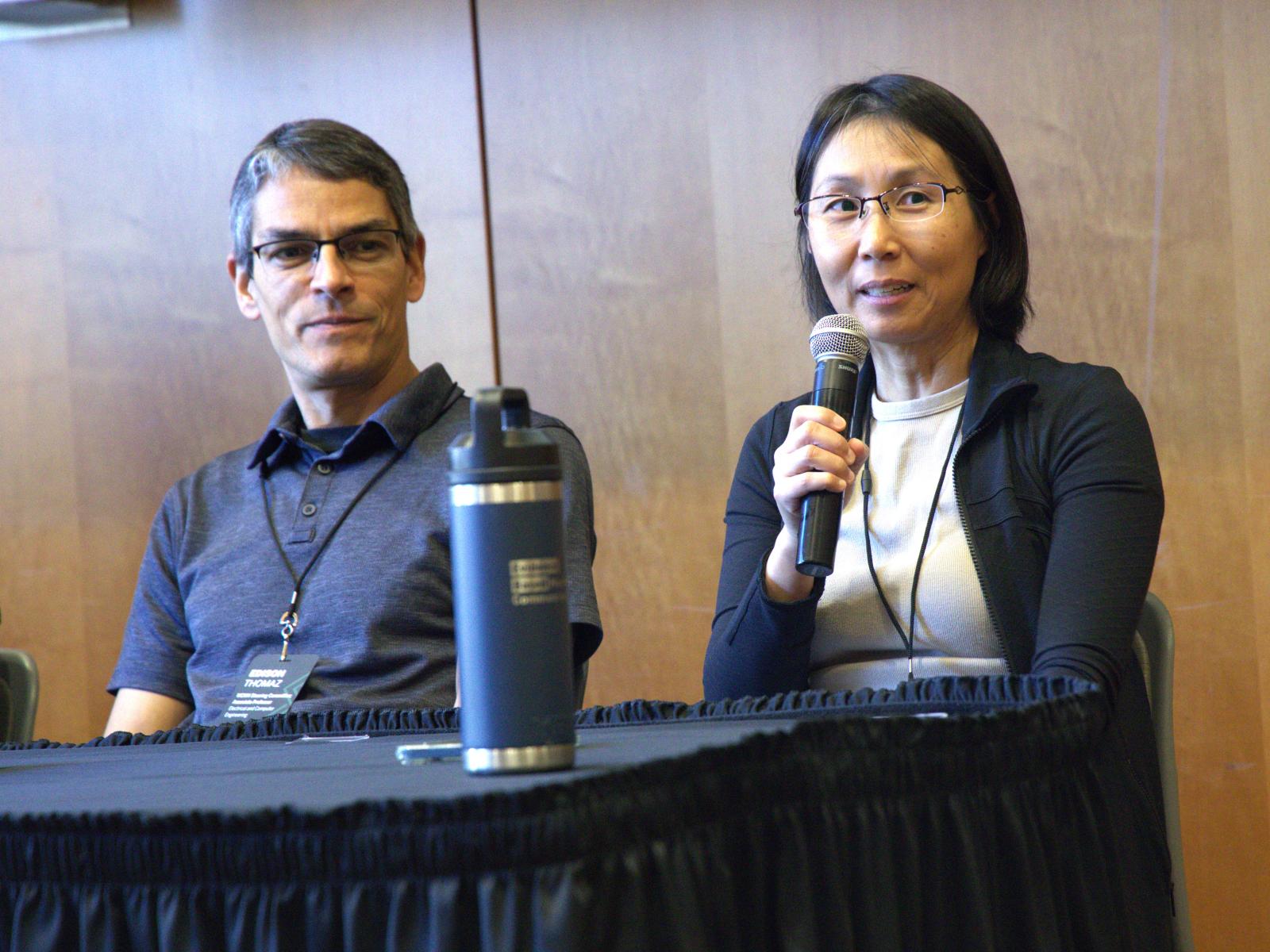
What stands out to you about Del Valle?
Kinney: One thing is how tight the community is. You hear “Smell Valley” and other things that have been thrown at Del Valle, and then you meet everyone and see what a vibrant community it is.
The second thing is that until Evan [Williams, a graduate student in Kinney’s lab] started collecting water samples in eastern Travis County, I did not realize there were 90 small water systems in one county, many clustered around the eastern and southeast corridor. Understanding the lack of trust community members have in their water systems, especially the smaller systems, was important for our group to understand.
Guerra: One thing I realized, which was an aha moment and also an egg-on-my-face moment, is that Del Valle is not one monolith. There is Hornsby Bend, Webberville, Creedmoor, Del Valle proper. We can’t approach one area encompassed by one school district as a single community. We need different approaches in each smaller subcommunity.
People have been asked time and time again about their feedback and their needs. The time to make an impact is here. Despite the fact that things are far away — grocery stores, pharmacies, health centers, recreation centers — people still find ways to come together. It’s a very joyous community.
Thomaz: I’m embarrassed to say I didn’t know about Del Valle at all, probably like many Austinites living in a bubble. Thanks to this project, it opened my eyes to these communities around us. I had the opportunity to run two workshop summer camps with kids at Gilbert Elementary, to go there and meet the kids and spend time with them. Becoming more aware has been very valuable to me as a researcher and as a citizen of the area.
Zhang: I had the opportunity to tour Del Valle for a day with other researchers and CST members. My impression is that it is very diverse, dynamic and vibrant, even though there are issues like food access and commute problems. The community seems very knit together, and people are trying to get together to do something different.
"Epigenetics was fascinating to me, so I did a whole series [of sermons] on epigenetics and how stress transcends the moment and affects you and your children years later. The work is not just affecting us. It is going out and impacting community members who may not ever be in these halls."
— Charles Moody, Jr., Community Coalition for Health
As WCWH moves toward transition, where would you like to see the work go?
Moody: My big challenge is how we transition from information and research to impact in the community. How do we train community members to use this information? If UT doesn’t want to do the advocacy part, those advocates can still stand up with UT information behind them and say, “We researched this, and this is true and factual. Policy needs to change. Programs need to change.” My push is from information to impact and implementation.
I would also introduce a challenge: Could we be the first institution to develop research practitioners — people who specialize in taking these strategies that we research and going into the community and bringing them to pass? There is a disconnect between the research and the practitioner, the person, the community. You refer to us as community members, but we’re also practitioners.
Thomaz: We have lots of studies that start and end, and I’m a big fan of long-term studies. I just don’t want the study to end. These problems are solvable. They are not easy, but they can be solved. You just have to show the value.
One thing I wish we had spent more time on early is how to make sense of the data and visualize the data. Initially, it was all about how to collect the data, how to engage with the community and what instruments and sensors to use. But how do we bring all these streams of data together and make sense of them so we can get to impact more efficiently?
Kinney: I will cheat, as I agree with both of the previous two answers: continue the longer-term study, implement solutions, see which ones work and document them — both from a community impact standpoint and, let’s be honest, an economic impact standpoint, because that seems to move certain groups.
When you do research and try to get the message out there, you almost view it as one-way. I didn’t anticipate how much I would learn from my colleagues, from how interdisciplinary this project is, from working over time with the community and with the CST. The lessons learned and the way of thinking more holistically carry forward.
"Never had I seen or heard of a research project be so responsive to a community, and specifically to a team of community members — really engaging with them on a regular basis, laying out what the findings are and what the terminology is, so we could provide feedback. Then actually seeing changes implemented has been amazing."
— Isela Guerra, Central Health
Guerra: I would add new partnerships across the county or with other entities that could be involved in making that impact. I would love to see an expansion there, and for that to be a way to continue, if not the study, then the work toward impact.
Although the data is aggregated, there is still a very human component to the work. Don’t ever lose that. Yes, you’re receiving information and data points, but individuals are interested in learning what you have discovered, in a way that’s understandable and with an ability to impact their communities for the better.
Zhang: We study information and literacy, and both are important. But the longer I’m in the field, the more I feel that you need to translate information into something more powerful, which is impact. Presenting information to people is not the end. Presenting information should help empower people to achieve their eventual goals. I would love to be part of the effort of turning information and knowledge into social impact.
As the data return group has worked with different scientific research groups, we have accumulated local and scientific resources about water quality, health and wellness, and childhood development. One concrete thing we are thinking about now is how to consolidate these valuable, trustworthy resources across different health topics and provide access to community members to produce a positive social impact.