
An interdisciplinary team of Whole Communities–Whole Health researchers is launching a new study of air quality and health in southeast Austin, building on questions and concerns raised by community members.
The team includes Pawel Misztal, Sergio Castellanos and Kerry Kinney from the Maseeh Department of Civil, Architectural and Environmental Engineering, along with nutritional sciences professor Leah Whigham from the College of Natural Sciences. Their project focuses on neighborhoods around ZIP code 78744, where WCWH community interviews have identified concerns about pollution from nearby industrial operations, but where formal air-quality monitoring has been limited.
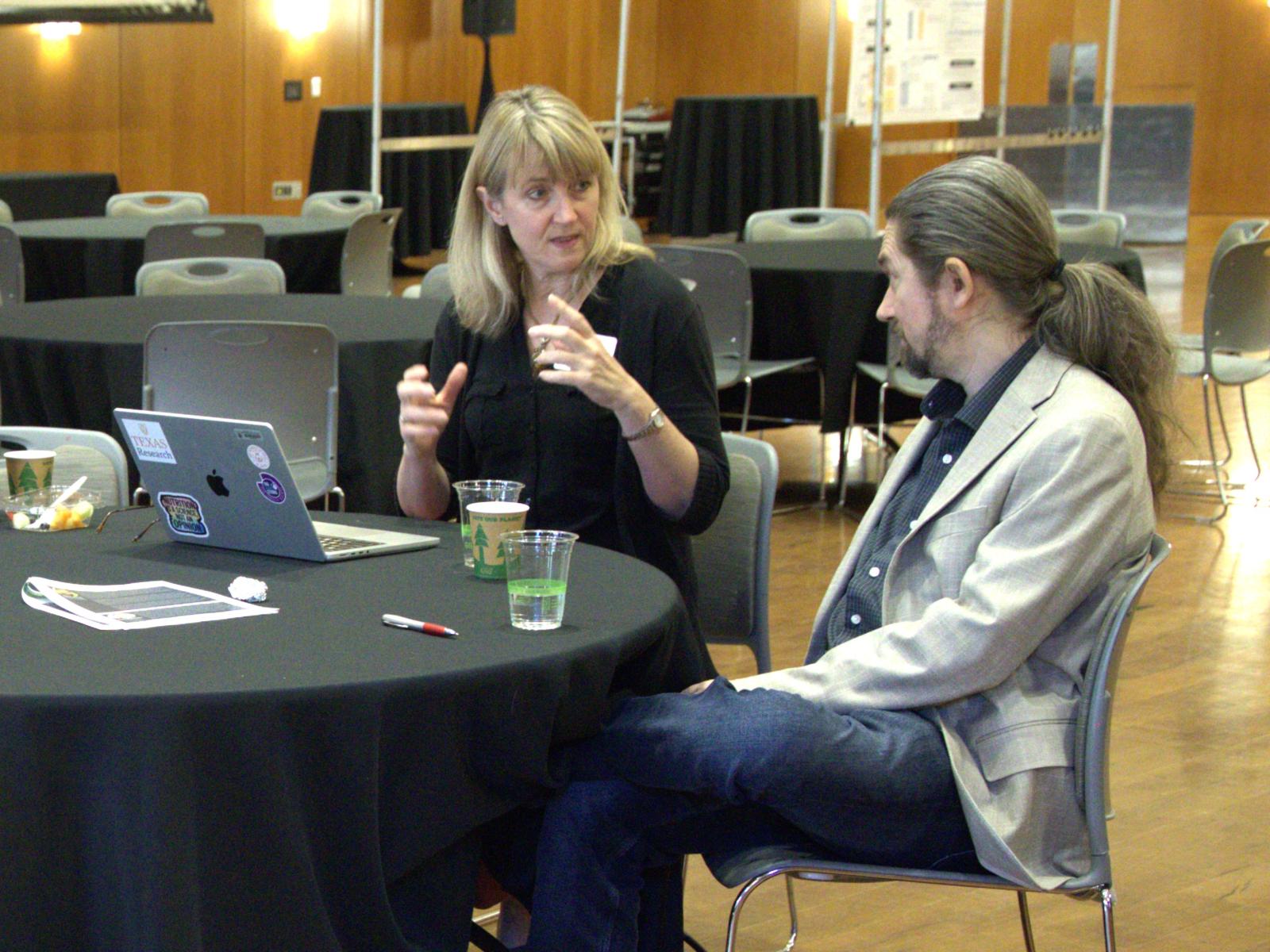
The project was selected through Whole Communities–Whole Health’s flash funding competition, where interdisciplinary teams prepare and present their ideas over the course of a single morning at WCWH’s annual research symposium. The winning proposal — “Outdoor Air Quality Measurements on Industrial Growth Activities in Southeast Austin” — brings together researchers from engineering, energy policy and public health to measure pollution levels near rapidly expanding industrial facilities and explore possible links to health outcomes in nearby communities.
“These rapid-pitch competitions are a great way to surface bold ideas,” said WCWH chair Mike Mackert, director of UT’s Center for Health Communication and professor in the School of Advertising & Public Relations and Department of Population Health. “This project stood out because it tackles a real community concern while advancing the science around environmental exposures and health.”
Using advanced monitoring equipment, including a mobile UT laboratory equipped to detect volatile organic compounds and sensors that measure particulate pollution in real time, the researchers will collect detailed environmental data during both the construction and operation phases of industrial facilities.
“This project stood out because it tackles a real community concern while advancing the science around environmental exposures and health.”
— Mike Mackert, Whole Communities–Whole Health chair
The project will also integrate these measurements with community health indicators collected by WCWH researchers to explore potential relationships between pollution exposure and metabolic health outcomes.
“Communities in Southeast Austin have raised important questions about environmental and nutritional factors affecting their health,” Misztal said. “By linking detailed measurements of air composition in these neighborhoods with health data already being collected through WCWH, we hope to discover ways to improve human health and wellbeing.”
The team plans to deploy monitoring instruments throughout the coming year and produce a report summarizing the results, which will be shared with community members and policymakers.
“By combining several types of air monitoring technologies, this project will lay the groundwork for larger collaborations aimed at improving environmental monitoring in rapidly growing areas of Travis County,” Castellanos said.
The flash funding competition is a highlight of the annual WCWH research symposium, where interdisciplinary teams present rapid-fire pitches for small seed grants that can launch new collaborations and generate data for larger future projects.
For the winning team, the award will support monitoring equipment costs and graduate research assistance as the project gets underway. The researchers say the work could ultimately help communities and regulators better understand air pollution risks and guide decisions about industrial development and monitoring.