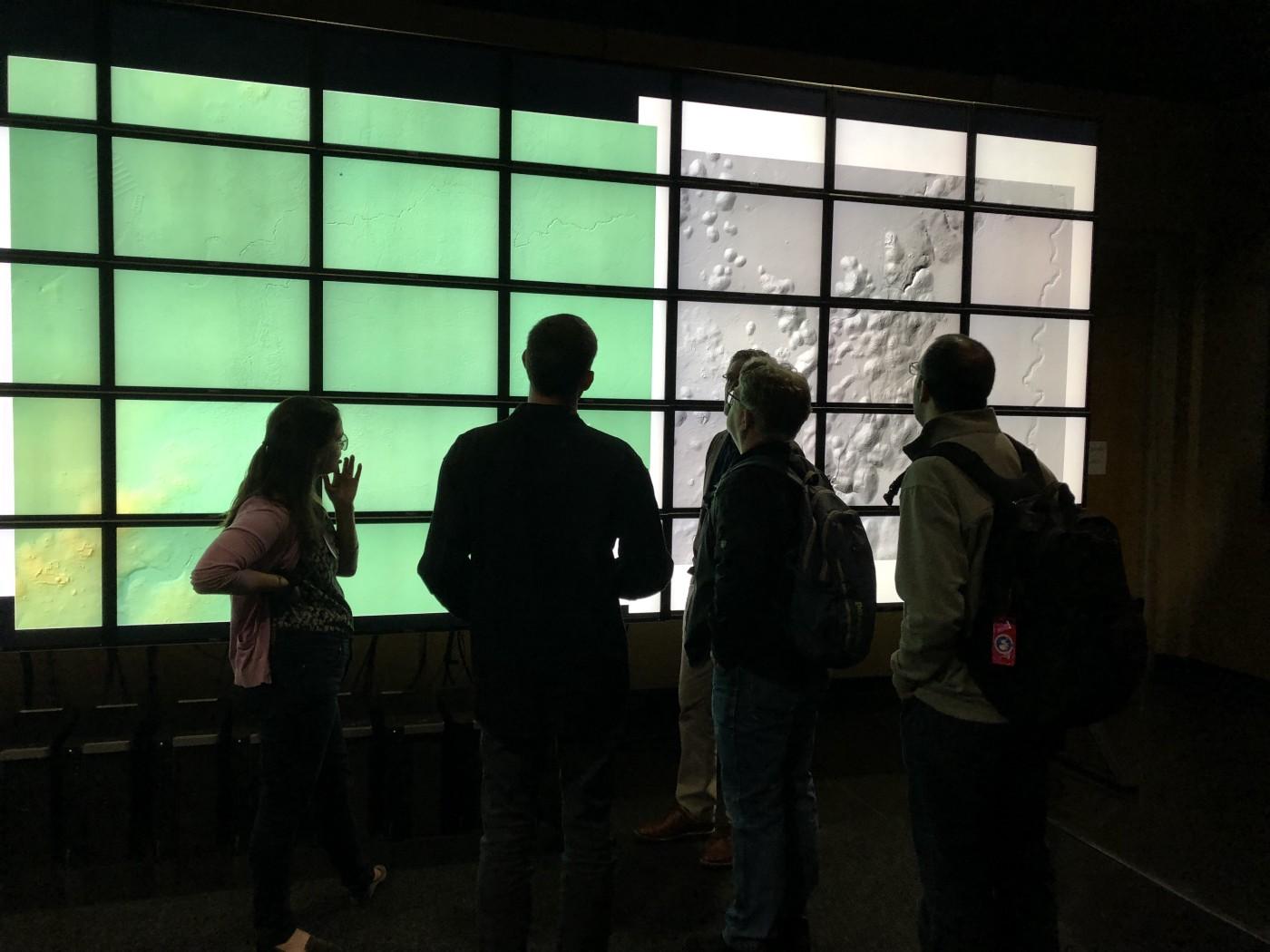
student demonstrates a VR game
Feb. 27, 2020
From Virtual to Reality: Take a Walk Around Austin in 2050
We're designing virtual reality simulations that will help people see what their city could look like in 30 years, given a massively increased population and a changing climate. Our aim is to make scientific findings accessible and relevant to people and to encourage informed discussions that can help us make better decisions about our future.
polar bears
Ene. 29, 2020
What Starts Here Can Save the Arctic
Planet Texas 2050 sponsored Seyi Odufuye, a UT studio art major, to join a 12-day ClimateForce expedition in the Arctic with environmentalist and explorer Robert Swan. His ClimateForce team is dedicated to significantly reducing carbon emissions in the next five years, and students from around the world join him each summer to see firsthand one of the planet’s most impressive yet delicate ecosystems. These are Seyi’s thoughts and experiences from that journey.
street art
Oct. 3, 2019
A Year in Pursuit of a Grand Challenge
David Schnyer is the inaugural faculty chair of Whole Communities –Whole Health. The team is partnering with families, schools, and community organizations in Central Texas to build a more complete picture of health. A year into the quest, Schnyer reflects on the team’s progress and looks to the road ahead.
gs web
Sept. 25, 2019
Designing AI Technologies that Benefit Society
The Good Systems team here at UT aims to help technologists stop to think about what they are doing. We’ve embarked on an 8-year mission to design AI technologies that are driven by human values and that benefit society. We’ve done so because we believe it is ethically irresponsible to think about AI only in terms of what it can do; we believe it is even more important to consider what AI should — and should not — do.
Tim Hwang
Sept. 24, 2019
AI Is Tricky: An Interview with Tim Hwang
Tim Hwang, a lawyer, writer, and researcher working at the intersection of emerging technologies and society, says this isn’t realistic; machine learning and AI aren’t as they’re portrayed in the movies. Hwang is the former director of the Harvard-MIT Ethics and Governance AI Initiative and has previously served Google’s global public policy lead on AI.
people holding hands
Sept. 17, 2019
The Heart of the Matter: Why Relationships Belong in Research
For scientists, building relationships means getting out of our heads and into our hearts. It means bringing our full self to the way we go about our quest to understand the world.
Above the Llano Estacado region of West Texas
Junio 4, 2019
Field Notes: Something’s Happening to the Weather
Paul Adams, a professor the Department of Geography and the Environment at The University of Texas at Austin, has met with farmers in the Panhandle and West Texas. He wanted to hear how they talk about things like the weather, climate, and the water they have available for their crops. If we don’t understand how people communicate about the ground they live on, we’ll have little success finding common ground to propel us toward a more resilient future.
paint on wall
Feb. 14, 2019
Imagining Solutions-Driven Community Centers
Austin Community Design and Development Center (ACDDC) collaborated with the Planet Texas 2050 team to ensure that researcher/community relationships are established in a way that is socially and culturally appropriate while fostering long-term partnerships that benefit everyone.
grain elevator
Feb. 14, 2019
Q/A: Fourth National Climate Assessment and Texas
Geology Professor Jay Banner, one of the authors of the federally mandated climate report released this past November, sat down with Spectrum News Austin’s Karina Kling to talk about what the climate and economic predictions mean for Texas and the southern U.S.
student lunch meal
Nov. 27, 2018
Children Are Researchers, Too
Children have a remarkable understanding of the things around them that affect their health and their community’s wellbeing. Although they may not have the language to describe it, young children and adolescents feel and experience injustice and inequity; however, their voices are often silenced or dismissed as juvenile.